


2026 Buying Guide
A practical framework for natural POV video, practical power, open-ear audio, AI editing, ride data, and prescription-friendly lenses.
Cycling camera glasses are for riders who want to capture a ride without building the ride around a separate camera setup. The appeal is simple: the camera is already where you are looking, so a climb, descent, commute, or group-ride moment is easier to record when it happens.
The useful question is not which wearable has the longest specification list. It is whether the glasses are comfortable enough to wear, practical enough to control, and easy enough to turn into a clip you will actually keep or share. Whether you call them cycling glasses with camera, AI cycling glasses, or camera glasses for cycling, those are the buying decisions that matter.
Editorial note: This guide is published by BleeqUp, the maker of Ranger. It explains the buying criteria we design around and uses Ranger as a concrete example. Choose the setup that best fits your own riding needs.
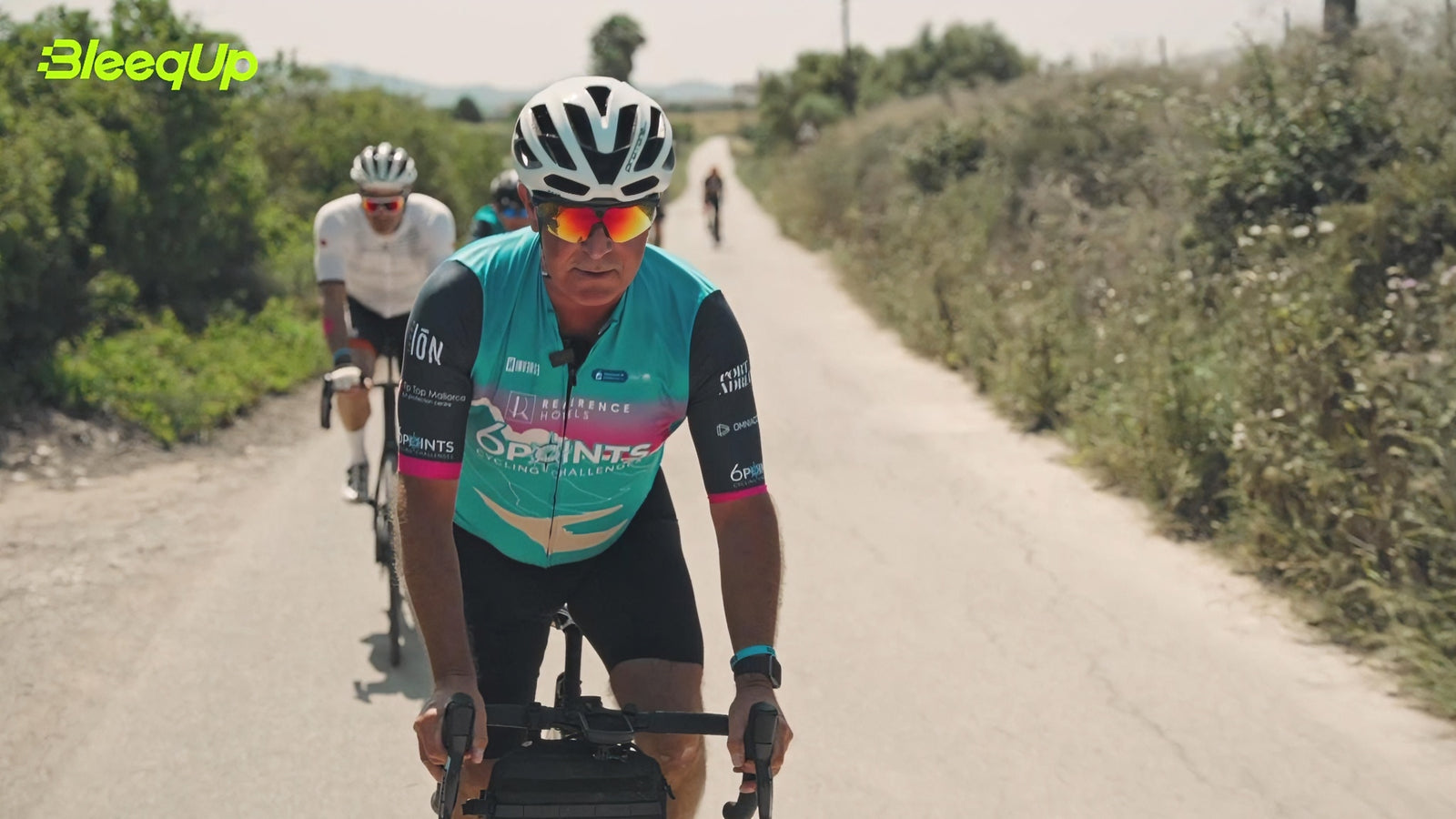
Quick checklist before you buy
- Secure, lightweight fit: the frame should remain comfortable through movement, sweat, and long sessions.
- Eye-level POV and stabilization: footage needs a natural angle, useful field of view, and controlled motion.
- A realistic power plan: consider recording time, storage, charging, and any extended-battery option.
- Open-ear audio and clear controls: capture, prompts, calls, and music should not make the ride more complicated.
- An app that finishes the job: importing footage, finding highlights, and sharing clips should be straightforward.
- Lenses and RX support: UV protection, changing-light options, and prescription compatibility are part of the purchase.
1. Start with fit and an eye-level point of view
Camera glasses are still cycling glasses. If a frame feels top-heavy, shifts on rough road, or becomes distracting after an hour, the camera function will not rescue the experience. Look for a sport-oriented frame, balanced weight, stable nose support, and lens coverage that suits the conditions you ride in.
The defining benefit of cycling glasses with camera is the eye-level perspective. It records the route from the rider's natural line of sight without asking you to aim a separate device. That makes a setup useful for everyday rides as well as content creation: there is less preparation before a scenic turn, a training effort, or a group-ride moment.
For a concrete benchmark, a 49g frame is light enough to make all-day wear a realistic goal rather than a short-demo feature. Fit should still come first: adjust the nose support, confirm the frame works with your helmet, and make sure the lens choice fits the light you expect.
2. Choose video for real riding, not a headline number
Resolution matters, but it is only one part of a usable cycling camera. Look for a natural eye-level field of view, electronic stabilization, enough detail for road and scenery, and both landscape and portrait options if you publish to more than one channel.
For riders comparing cycling camera glasses, a mode such as 3K60 can be a strong practical target because it balances motion and detail. A 120-degree field of view gives useful road and trail context without forcing a helmet- or handlebar-mounted view. Check the compatibility notes before you buy: high-frame-rate modes can depend on the phone and operating system you use.
Compatibility note: High-frame-rate video features, including 1080p60, 3K30, and 3K60, are currently available on iPhone 14 or later running iOS 18.7.5 or later. Android support is under development. Feature availability and performance may vary by device, so check the current product page before ordering.
Useful features include loop recording, clear capture feedback, and a simple way to mark a moment. These details determine whether a camera becomes part of a weekly riding routine or stays in a drawer after the first ride.
3. Plan for battery, audio, and controls together
Battery life should match the type of riding you do. A short social clip, a daily commute, and a four-hour weekend route have very different requirements. Check continuous recording time, storage, charge time, and whether the system has an extended-battery option before treating a product as a long-ride solution.
For example, BleeqUp Ranger is rated for about one hour of continuous video from the glasses. Paired with the 1600 mAh Power Plus, it is designed for up to five hours of continuous recording. That gives riders a more realistic option for longer routes and several short capture sessions in one day.
Actual runtime varies with capture settings, usage, and conditions. Check the current product page before treating any stated maximum as a guarantee for a specific ride.
Open-ear audio and controls belong in the same decision. Riders may want route prompts, music, calls, or intercom without adding another device to the ride. If you often record while moving, a handlebar-ready Bluetooth Controller can make capture more convenient than reaching for a phone.

4. The app should turn footage into something useful
Most riders do not need more unedited video. They need a quicker route from a recorded ride to a clip worth keeping. That is why the app workflow can matter as much as the camera hardware.
A useful camera-glasses app should make it easy to connect the glasses, adjust capture settings, import clips, manage sound modes, and find the moments that matter. For riders, AI editing is valuable when it shortens the gap between "I recorded that" and "I can share that." BleeqUp's app includes One-Tap Clip, AI Highlights, video settings, sound modes, intercom channels, and map-based ride context.
Data overlays make the story clearer. A route, speed, cadence, heart-rate, or map reference can make a descent or training clip more useful for reviewing a ride. Ranger supports Garmin cadence and heart-rate sensors for ride-data overlays.
5. Do not compromise on lenses or prescription needs
Cycling sunglasses with camera still need to work as outdoor eyewear. Check UV protection, coverage, changing-light options, lens replacement, and how the frame fits under your helmet. Riders who move between bright roads, shade, and late-afternoon light may value different lenses from riders who only record in full sun.
Swappable lenses give the frame more range across conditions. If premium optics are a priority, the Ranger ZEISS lenses guide explains that option in more detail.
Prescription users should confirm the exact workflow before purchase. The Prescription page explains the available customization path.
Prescription note: Every Ranger purchase includes a free RX lens insert. Prescription lenses and fitting are not included; take the insert to a local optician to have lenses made for your prescription.
6. How BleeqUp Ranger fits the checklist
BleeqUp Ranger is a useful example of what a cycling-focused wearable system can include. It brings together 3K60 video on compatible iPhones, a 120-degree eye-level field of view, electronic stabilization, landscape and portrait capture, loop recording, open-ear audio, wind-noise reduction, 32GB storage, a 49g TR90 frame, UV400 lens protection, IP54 splash resistance, and RX-insert support.
It also connects the hardware to the rest of the riding workflow: the BleeqUp app for AI-assisted clips and settings, Power Plus for longer recording, a Bluetooth Controller for capture control, and Garmin-compatible ride data overlays. The point is not to buy every accessory. It is to choose the combination that fits how you ride.

For a product-specific perspective, read the BleeqUp Ranger review.
7. Who are camera glasses for?
Camera glasses make most sense for riders who want hands-free POV capture, quicker post-ride clips, open-ear audio, or ride context without carrying a separate camera setup for every session. They can fit commuters, road and gravel riders, creators, and athletes who value footage alongside their usual training data.
Start with comfort, then match video, power, controls, app workflow, and lenses to your normal rides. The best choice is the one you will want to wear before the ride begins and will be happy to use after it ends.
FAQ
Are camera glasses good for cycling?
They can be, provided the frame is designed for sport use. Prioritize a stable fit, useful eye-level video, appropriate battery life, practical controls, and lens options suited to your riding conditions.
What should cycling camera glasses record?
Look for stable footage, a useful field of view, and enough frame rate for motion. 3K60, a 120-degree eye-level field of view, and electronic stabilization are practical reference points, subject to your phone and app compatibility.
How are camera glasses different from a helmet or handlebar camera?
They offer a different setup: the camera follows the rider's line of sight and does not require an extra mount. Choose the format that best matches the perspective and workflow you want for each ride.
Can camera glasses work with prescription lenses?
Some can. Ranger includes an RX insert, and prescription lenses can be fitted separately. Confirm the exact prescription process with an optician before ordering.
Are camera glasses useful for long rides?
They can be when the recording plan matches the route. Check continuous video time, storage, charge time, and extended-battery support rather than assuming a short-clip runtime will cover a full day.


