


Multi-Sport Buying Guide
A practical way to compare sports camera glasses and smart glasses for sports across running, cycling, hiking, and outdoor training.
The terms sports camera glasses, smart glasses for sports, and sports glasses with a camera are often used as though they mean the same thing. They do not always describe the same kind of product.
For an outdoor athlete, the useful question is not which label sounds more advanced. It is what the glasses need to do during a real session. Do you want first-person footage? Easier communication with a group? Open-ear audio that does not isolate you from the environment? A lighter way to review or share a run, ride, hike, or training session afterward?
Quick distinction: Sports camera glasses are usually chosen around hands-free point-of-view capture and active comfort. Smart glasses for sports can include many different functions, from audio and assistants to displays or cameras. The feature list, fit, and local availability matter more than the category name.

Start with the job you want the glasses to do
The best choice begins with the moment you want to improve.
- Capture a first-person session: A camera-first design can make sense when you want a natural point of view without a helmet mount, chest strap, or phone in hand.
- Stay aware while listening or communicating: Open-ear audio can be useful when you need to hear cues, teammates, traffic, or the environment around you. It is not a substitute for attention or local safety rules.
- Review training or tell a story afterward: An App workflow matters when the goal is not only recording files, but finding, reviewing, and shaping a useful clip.
- Wear the glasses for the full activity: Stable fit, lens comfort, weather suitability, and the way controls work while moving often matter more than a long feature checklist.
Sports camera glasses vs smart glasses for sports
There is no single industry definition for smart glasses. Some products emphasize audio, some focus on a display or assistant, and some include a camera. Sports camera glasses are typically evaluated more directly around active movement, POV capture, and the comfort needed for an outdoor session.
| What to compare | Sports camera glasses | Smart glasses for sports |
|---|---|---|
| Main starting point | Hands-free POV capture and sports-eyewear comfort. | Can begin with audio, an assistant, a display, a camera, or a mix of features. |
| Camera question | Is the capture angle useful while moving? | Does the model include a camera, and is it suitable for the activity? |
| Fit question | Does it stay comfortable and stable during the sport? | Does the product's everyday design suit active movement? |
| After-session workflow | Can footage move into a usable review or editing process? | Check the companion App, export flow, storage, and sharing options. |
The categories can overlap. A camera-enabled smart-glasses product may work well for sports, and a sports camera-glasses product can include smart features. The value of the comparison is to make the decision concrete rather than treating every pair of smart glasses as interchangeable.
Five things that matter for outdoor athletes
1. A useful POV, not just a camera on the spec sheet
For running, cycling, hiking, or trail sessions, a camera should help you capture an experience without changing the activity itself. Think about your normal posture, the type of movement, and whether the footage will be meaningful after the session. A useful point of view is one that lets you stay focused on the sport first.
2. Fit and comfort across the whole session
Sports glasses with a camera need to be judged as glasses first. Check fit while looking down, accelerating, climbing, or changing direction. Consider the lens option that fits your conditions, whether prescription support is available, and how the frame works with other gear such as a helmet, cap, or running headwear.
3. Open-ear audio and awareness
Audio can make AI sports glasses more useful for prompts, calls, group coordination, or a post-session routine. Active environments are different from a quiet room, though. Keep volume at a responsible level, make adjustments while stopped, and follow local rules and conditions.
4. Controls that do not create distraction
The strongest sports workflow is usually simple: prepare before the activity, keep moving during it, and review afterward. Before buying, ask how you start or stop recording, how you confirm a setting, and whether the control method still makes sense with gloves, sweat, wind, or uneven terrain.
5. The App and editing workflow after the activity
Many people search for AI smart glasses with camera because they want more than raw files. They want a practical path from a session to a clip, memory, or training record. The BleeqUp App guide explains the current Ranger workflow for connection, clips, AI Highlights, maps, and intercom. Treat any AI feature as a way to shorten review work, not as a replacement for your judgment about what matters.

How the choice changes by sport
Running and trail running
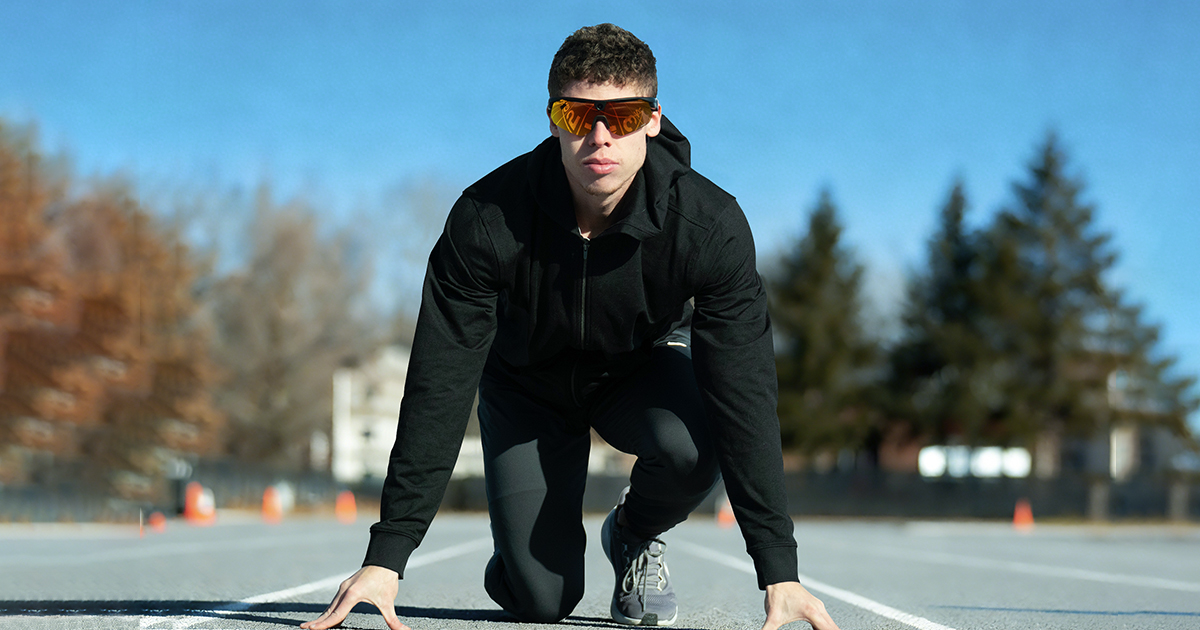
For runners, the priorities are usually stable fit, low distraction, and awareness. The category is already generating relevant searches such as AI running glasses and smart glasses for running, so it is worth evaluating whether the product suits normal training rather than only a short demo. For a real sports-camera-glasses example in sprint training, see Kalen Walker's BleeqUp Ranger story.
Cycling
Cycling remains a useful camera-glasses use case because mounts, traffic awareness, wind, and longer sessions all shape the decision. The Camera Glasses for Cycling guide goes deeper into the buying criteria for riders. The core rule is the same as in other sports: choose equipment that supports the session rather than asking you to manage it while moving.
Hiking and outdoor travel
Hikers and outdoor travelers may care most about hands-free capture, lens comfort, weather conditions, and a simple way to turn selected moments into a story later. The best workflow is often selective: record the moments that matter, then review a smaller set of clips rather than treating the whole day as continuous production.
Where BleeqUp Ranger fits
BleeqUp Ranger is a camera-first example within the broader smart-glasses conversation. Its product approach combines sports eyewear, hands-free POV capture, open-ear audio, and a companion App workflow. That makes it relevant to people searching for sports camera glasses, AI sports glasses, or smart glasses with a camera who also want the product to fit an active outdoor routine.
The BleeqUp Ranger review covers the current product context in more detail. If you are looking for a reliable, camera-first setup that fits your active routine, explore the Ranger product page to check current lens options, availability, and market-specific details before making a purchase decision.
FAQ
Are sports camera glasses the same as smart glasses?
Not always. Sports camera glasses are commonly evaluated around hands-free POV capture, active fit, and outdoor use. Smart glasses can describe a broader range of products with audio, assistants, displays, cameras, or other functions. Check the actual features and whether they suit your activity.
What should runners look for in smart glasses for sports?
Runners should prioritize stable fit, low distraction, awareness of the environment, and controls that are practical during training. If a camera is important, check whether the POV, comfort, App workflow, and local use rules fit the way you run.
Can smart glasses for sports record video?
Some can, but camera capability varies by model. Confirm the current video specifications, storage, companion App workflow, compatibility, and availability before buying. A product called smart glasses does not automatically include a camera or a sports-ready recording setup.
Are sports glasses with a camera suitable for group outdoor activities?
They can be useful for capturing shared sessions or coordinating through supported audio features, but they should never replace attention to people, roads, trails, or local rules. Set up controls while stopped and record others responsibly.


